Why Underserved Markets Are the Best Investment Opportunity

The Opportunity Hiding in Plain Sight
Every serious investor knows the principle: buy low, sell high. Find assets the market has mispriced, invest before the crowd catches on, and reap the rewards when reality corrects perception. Yet most investors apply this logic only to public equities, real estate, or tech startups in well-trodden ecosystems.
They are missing the most mispriced asset class on the planet: underserved markets.
What Makes a Market Underserved
An underserved market is not a broken market. It is a market where demand outstrips supply, where talented entrepreneurs lack access to capital, and where infrastructure gaps create outsized returns for those willing to build. These markets exist across Sub-Saharan Africa, Southeast Asia, Latin America, and within overlooked communities in the United States and Europe.
The defining characteristic is not poverty. It is potential without access. Brilliant founders with proven business models are turned away by investors who cannot see past unfamiliar geography or demographics. The result is a structural inefficiency that patient investors can exploit.
"The best returns come from investing where others refuse to look." -- This is not a feel-good slogan. It is a mathematical reality born from supply and demand.
The Numbers Tell the Story
Consider the data. According to the International Finance Corporation, there is a $5.2 trillion financing gap for micro, small, and medium enterprises in developing economies. That gap is not a problem to lament; it is an opportunity to seize.
In Sub-Saharan Africa alone, mobile money transactions exceeded $700 billion in 2023. The continent's working-age population will double by 2050. These are not speculative trends; they are demographic certainties that will reshape global commerce.
Meanwhile, venture capital in Africa received roughly $4.6 billion in 2022. Compare that to $238 billion deployed in the United States the same year. The disparity is staggering, and the opportunity is proportional.
Why Traditional Investors Miss It
Traditional investors miss underserved markets for three interconnected reasons:
1. Pattern matching gone wrong. Most venture investors look for founders who fit a specific mold: elite university, prior startup experience, warm introduction. In underserved markets, the best founders often lack these credentials while possessing something far more valuable -- intimate knowledge of their customer's pain points and the grit born from navigating real adversity.
2. Risk perception versus actual risk. Investors conflate unfamiliarity with risk. A fintech startup in Lagos is not inherently riskier than one in San Francisco. In many cases, the Lagos startup faces less competition, has lower customer acquisition costs, and serves a market with explosive growth potential.
3. Infrastructure bias. Investors accustomed to developed-market infrastructure struggle to evaluate businesses built for different contexts. But businesses that succeed despite infrastructure constraints are often more resilient, more capital-efficient, and better positioned for long-term dominance.
The Smart Capital Approach
Investing in underserved markets requires a different toolkit, not a different level of rigor. The due diligence is just as thorough. The financial analysis is just as sophisticated. What changes is the lens:
- Look for market creators, not just market entrants. The best investments in underserved markets are companies that build categories, not compete in them.
- Value resilience as a core metric. Founders who have navigated scarcity, regulatory complexity, and infrastructure gaps are battle-tested in ways that matter.
- Think in decades, not quarters. Patient capital earns outsized returns because it aligns with the timeline of genuine market development.
The Bottom Line
Underserved markets are not charity. They are not impact-washing. They are the single greatest investment opportunity of our generation, hiding behind a wall of bias, unfamiliarity, and institutional inertia.
The investors who see this clearly -- who combine rigorous financial discipline with the willingness to look where others will not -- will define the next era of global wealth creation.
I know this because I have lived on both sides of that wall.
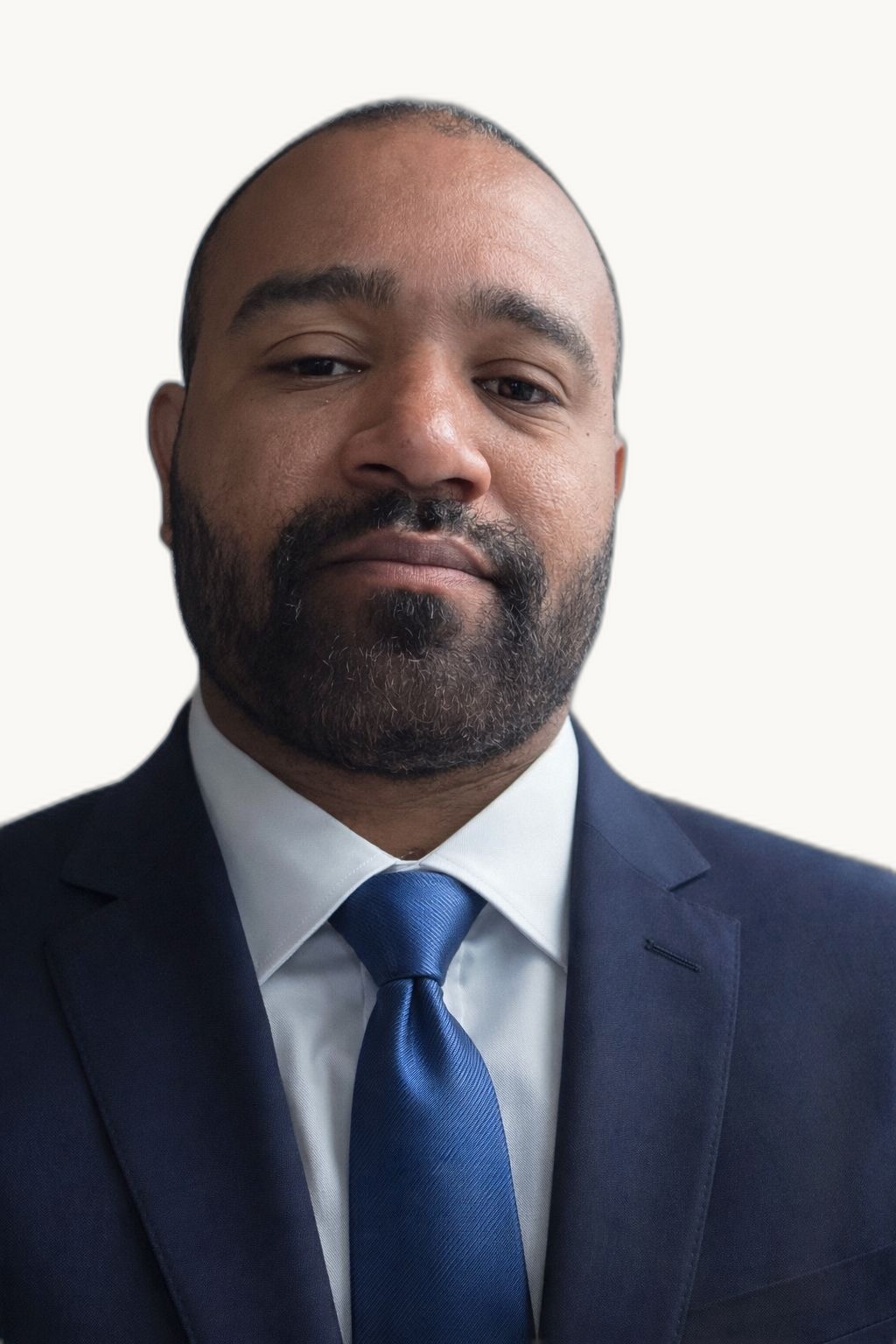
Investor and advisor focused on building ventures in underserved communities. Read my story →
Related Posts
The Future of Community Investment
Community investment is evolving from niche strategy to mainstream practice. Here is where it is headed and why it matters for every investor.
Scaling Impact: Ojufund's First Five Years
Five years of building an impact-first investment firm. What worked, what did not, and what we learned about deploying capital in underserved markets.
Why I Invest in People, Not Just Ideas
Ideas are abundant. Execution is rare. The single most important factor in any investment is the person behind it.